

Why Do You Paint So Small?
Big reasons for working tiny

From time to time people ask on social media:
“Why do you work so small? Why do you make those complete little paintings in a book? Why not paint them larger, on panels that you can exhibit and sell?”
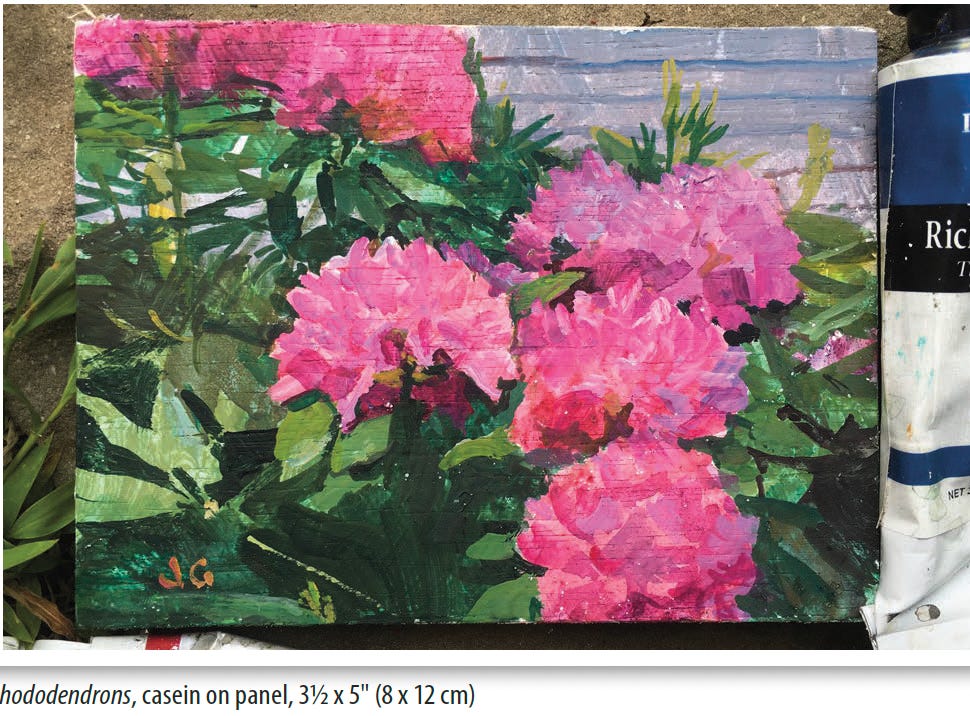
Well, let’s see. I don’t always paint in sketchbooks. Sometimes I use small panels for plein-air studies, like the recipe-card-size study of rhododendrons above, and sometimes I paint large, at least large for me, something like 16 by 20 inches.
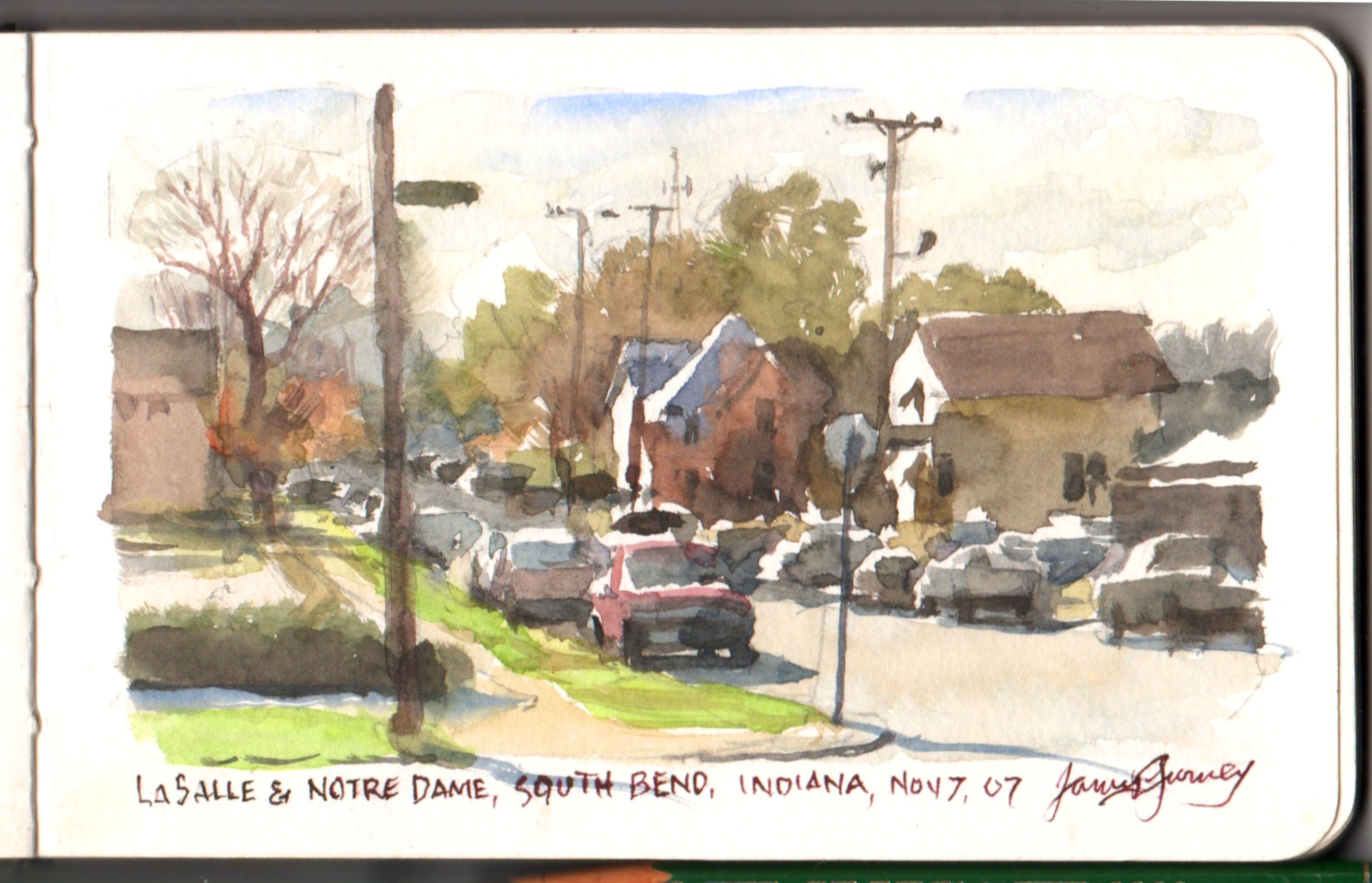
La Salle and Notre Dame, plein-air watercolor, 3 x 5”
But it’s a fair question, and it’s true. Most of my effort for the last twenty years has gone into miniature paintings in sketchbooks. Like anything in art, there are tradeoffs. I can’t exhibit them easily, and I wouldn’t want to sell them anyway. For me the upsides win. When I capture tiny scenes and moments in books, it feels like worlds open up. Memories are enshrined and tied together in time. Here are my thoughts about my Lilliputian libros.
1. Some of my favorite artists have worked small.
Old-master figure drawings were usually modest in scale, often no larger than a sheet of writing paper. Some of my favorite painters, like William Trost Richards, Ernest Meissonier, and Adolph Menzel, poured much of their effort into tiny, gemlike pictures.
2. I can do my art anywhere.
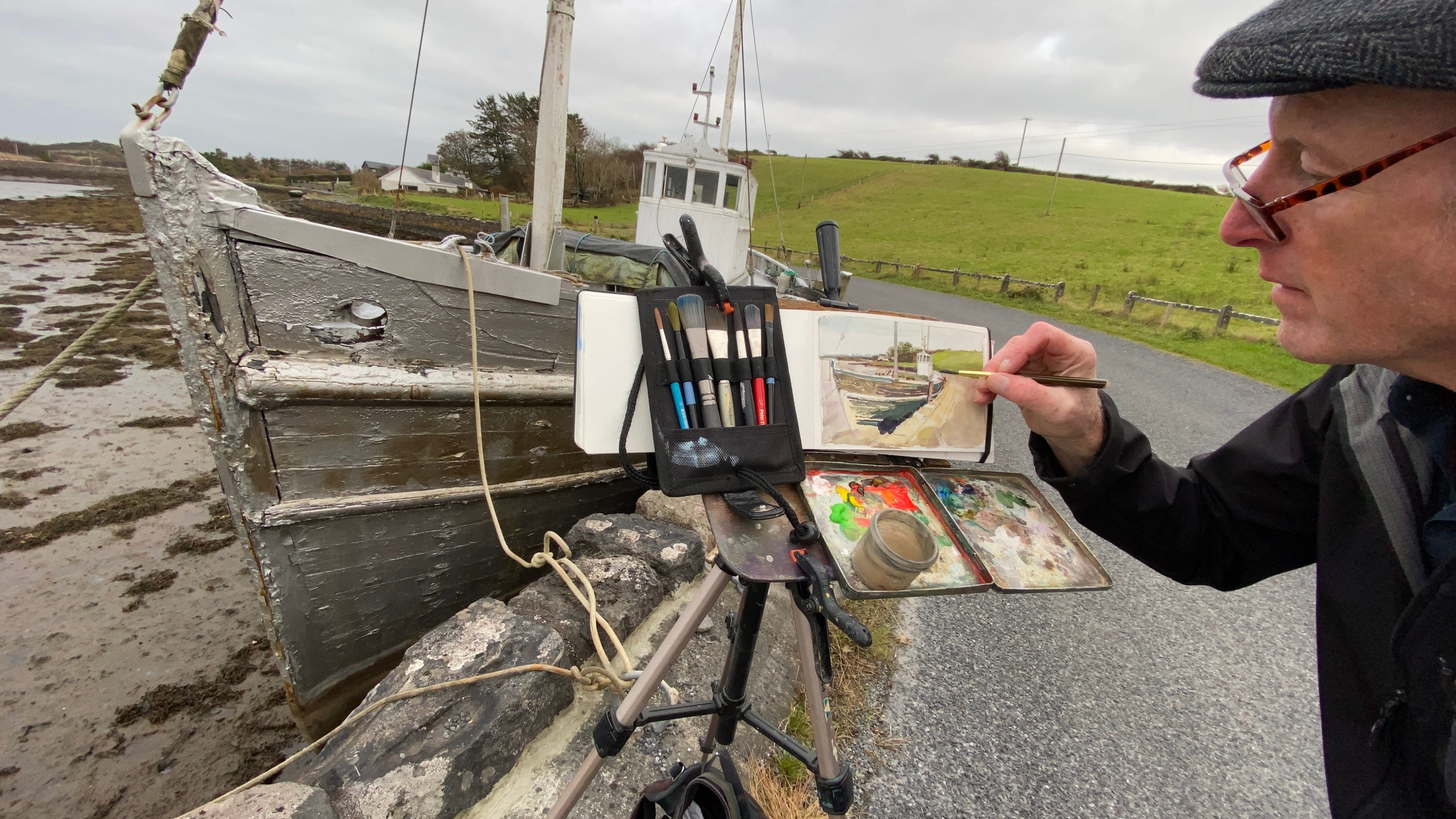
With a 5-by-8-inch watercolor / gouache sketchbook, I can set up in the most unlikely places: a booth in a diner, the waiting room at my tire shop, even the fruit section of a supermarket.
3. The art form is the video, not the painting.
Most of my channels of income are based on digital captures shared online. When I think about how my work reaches the most people, I realize the online form is where it lives. On screen there is no scale. There is only format and resolution. I recently got a clip-on macro lens for my iPhone, so I can capture the tiniest moments.
4. They are seeds for future work.
I don’t necessarily treat a plein-air study as a final harvest. It can also be a seed for a studio painting. A sketchbook full of color studies is a catalog of “bottled sunlight” and color experiments that I can reach into years later, when I am trying to conjure an imaginary world from nothing. These studies hold a truth of nature that no photograph can capture.
5. Small scale keeps me on my toes.
Working in the field is fast and unpredictable. It asks for the darting energy of a hummingbird and the intense focus of an owl at once, nothing like the oleaginous pace of the studio. Painting small lets me catch life on the run and record changing light before the moment vanishes. Because the scale stays manageable, I can reach a finished result no matter how little time I have, which sharpens my decision-making and forces me to commit to each stroke.
6. It spares me the burden of size.
Framing, transporting, and storing a large body of work becomes a real problem. I already have hundreds of framed paintings for museum shows, and they eat up storage. I am happy not to add to that load. Sketchbooks hold a full, unfiltered run of moments in a few inches of shelf space rather than a warehouse.
7. Precision is often easier small.
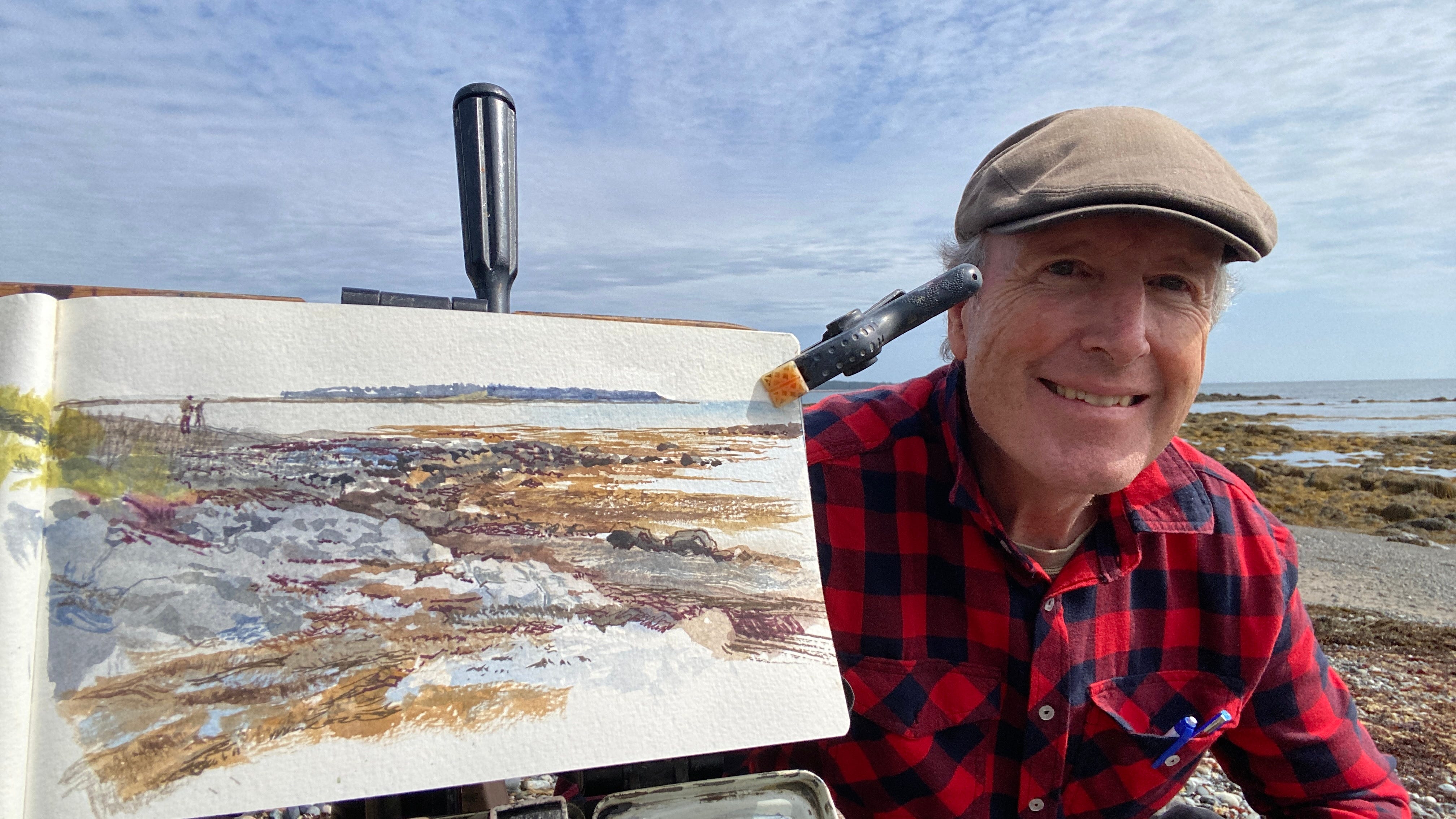
\As long as my eyesight and hand hold out, I find it easier to work out fine detail at a small scale. Artists like Charles Bargue proved that you can pack more information into a miniature than most artists get onto a large canvas—and those miniatures left indelible impressions on me when I saw the originals. When the goal is to tell a big truth through simple means, a small format helps me focus on the essentials without drowning in complexity.
8. It is cheap to fail.
If I screw up a 5-by-8 inch page, no big deal: I just scrub it down or re-prime it and all sins are absolved. A ruined 24x36” ACM (Aluminum Composire) panel costs around a hundred bucks. Small work frees me to take the risks that make a painting worth looking at. That includes the choice of subject matter. No problem painting an unlovely motif. I don’t have to worry if it will sell. And if it comes out just so-so, who cares? I just turn the page.
9. The book is the frame.
A painting on a wall has to consider the wall, the room, and the painting next to it. A painting in a sketchbook arrives with its its own neighbors on the facing page, its own sequence, and its own borders, sketchy or taped off. The book does the job a frame and a gallery wall would otherwise do. It manages the transition to the real world around it.
10. Finishing things feels good.
A small painting can be done in one sitting, start to finish. I get the full arc of a picture, the setup, the struggle, and the resolution, several times a week. Big paintings can drag on so long that the finish never quite comes. A stack of completed sketchbooks is a stack of small encounters with the world, away from the attention-grabbing demands of screens.
11. It is private until I decide otherwise.
A panel headed for exhibition or a live-streamed demo carries the burden of an audience before the first stroke goes down. A sketchbook page does not. I can paint something odd, personal, or experimental with nobody looking over my shoulder, then share it later if it deserves to be seen. The smallness keeps the stakes low and the truth-telling high
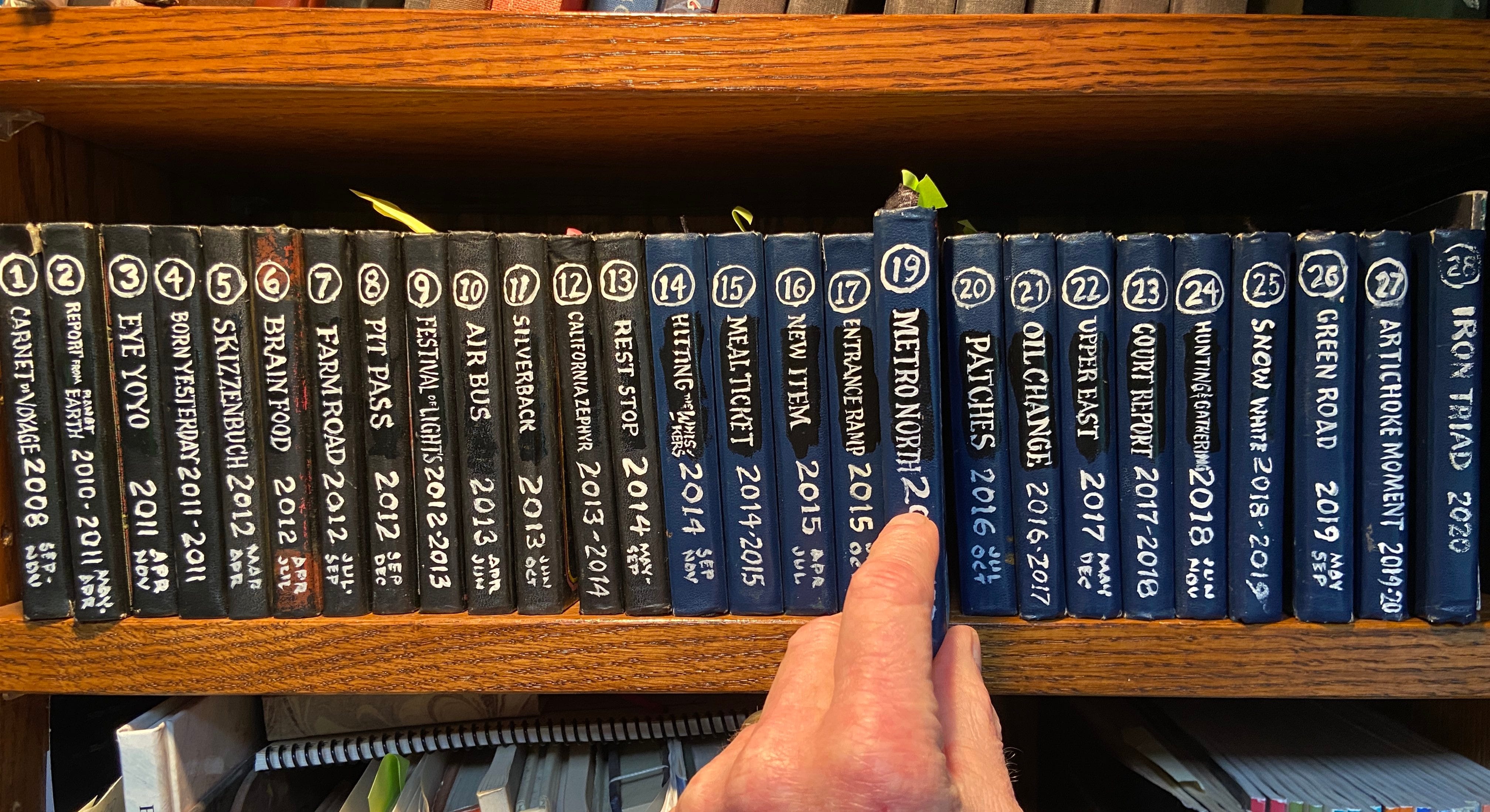
.
12. It keeps my art life complete and in order.
My sketchbooks live on a studio shelf, numbered and titled. It’s like a retirement home for opera singers. The little paintings have earned their keep, and they can still sing. I can make a new walkthrough video from the original art any time, or sail back to sunny shores in my memory. I am fierce about never slicing pages out. Galleries and collectors only want the cream of the crop anyway.
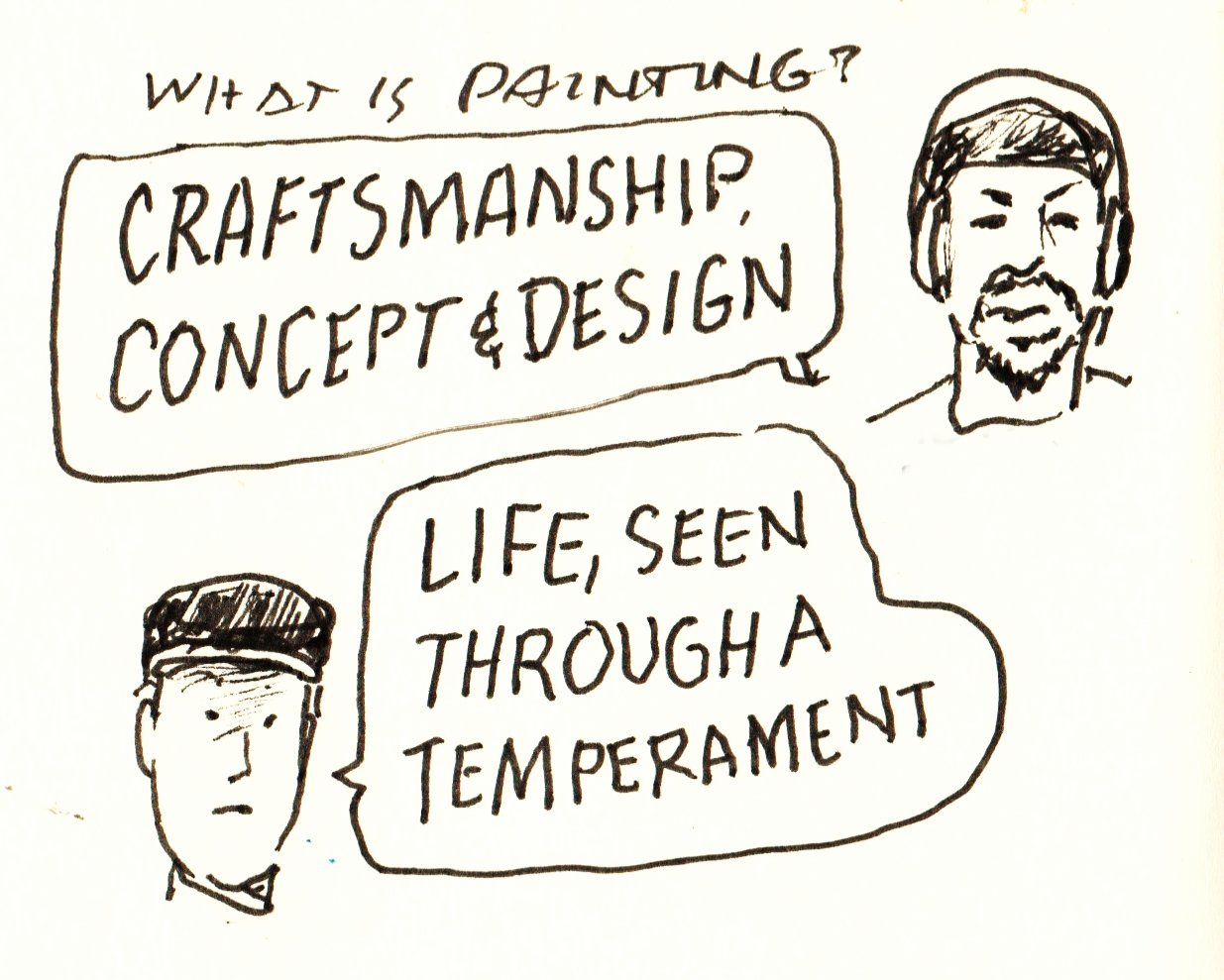
213. I can add written notes.
This has become a bigger thing for me lately, as my sketchbooks have become more like Illustrated writer’s notebooks. I’ve always brought pens along with my sketchbook, But lately I’ve taken a special pleasure in writing and drawing from my imagination.
14. It's the best way to protect and preserve my artwork
When I'm not looking at a painting, it's closed up in a book, in the dark, on a dry shelf. There are no bent corners, no yellowed edges, no UV damage, and no abrasion. Medieval illuminations that were painted in old Bibles still retain their vibrant color.
Where will my sketchbooks end up? Who knows? I might donate them to a few museums perhaps, but we will see.
Thank you for your defense as they mirror what I tell others. After 23 years of marketing and competing with my larger paintings (because that’s what you do if you’re serious they say) I just plain burnt out! Art became about the “sale”, “award”, posting etc, and I lost my passion for it. I began to learn to PLAY AGAIN by just working in my sketchbooks. I’d always told students your books were just for you if you wanted. It’s funny taking your own advice later….. I say I’m retired from marketing art but not creating. Now I travel in my campervan sketching just for me, I play with mixed media in my studio and a little on the road. Yayyyy for small works!!!!
Hi James. Thank you from my heart for vindicating me in my decision (over 20 years ago!) to paint small. I have only had ONE other artist/mentor support this decision and I'm grateful to him as well.
On my website, the first page has my statement, "Every corner of a home is Sacred. My paintings fit the smaller spaces; a window of escape before facing the world."
I began collecting art in my teens, so wanted to make my art affordable for those who were walking the same path; loving art desperately, but having limited resources. My little paintings have been featured at the entrance to the main gallery where folks sign the visitor book at a couple of venues. Fantastic exposure and great comments.
It's my belief that we have many artists doing "sofa sized" paintings, but my International collection, in each "Sacred corner" of my home, remind me that art is from someone's SOUL. They inspire my practice in hopes that my art will bring peace to someone in this frantic world.