


Lighting designers and photographers are aware of how hard or soft the light is. What do they mean?
Hard light has sharp shadows
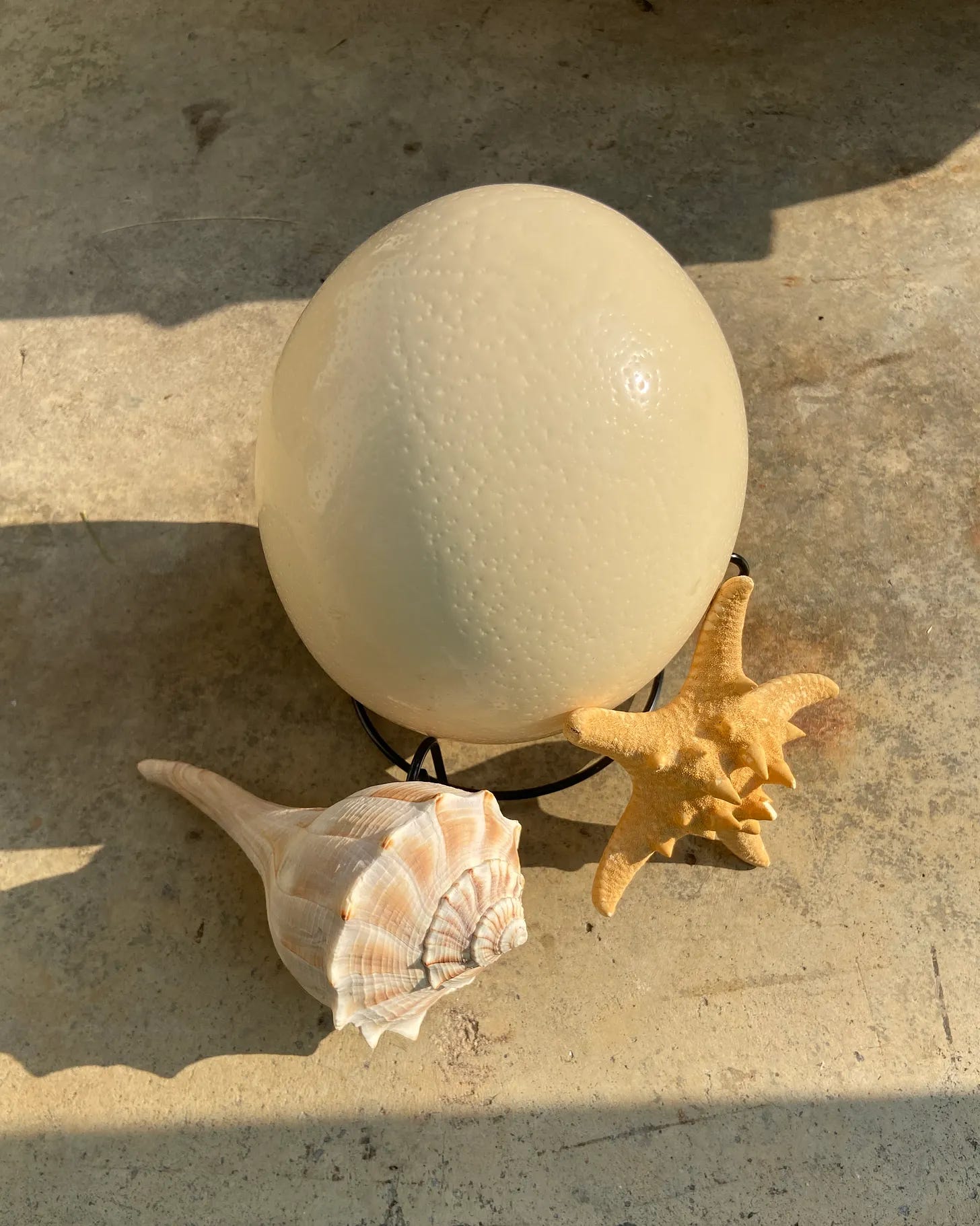
Hard light (sunlight)
The quality of “hardness” or “softness” of light results from how large the source appears to be from the point of view of the subject.
If you hold your thumb up at arm’s length and can hide the source behind it, the light would be considered hard. The sun is an enormous object obviously, but its disc appears small, so it behaves like a hard source.
But because of the size of the sun, the edges of even those cast shadows get a litte softer as they get farther from the object casting them.
One more thing to notice about that photo of hard light: Texture shows up in the half light, that region where the light turns from light to shade. Look closely at the photo of the ostrich egg, and the air pores are most visible near the division between light and shadow.
Soft light has soft shadows
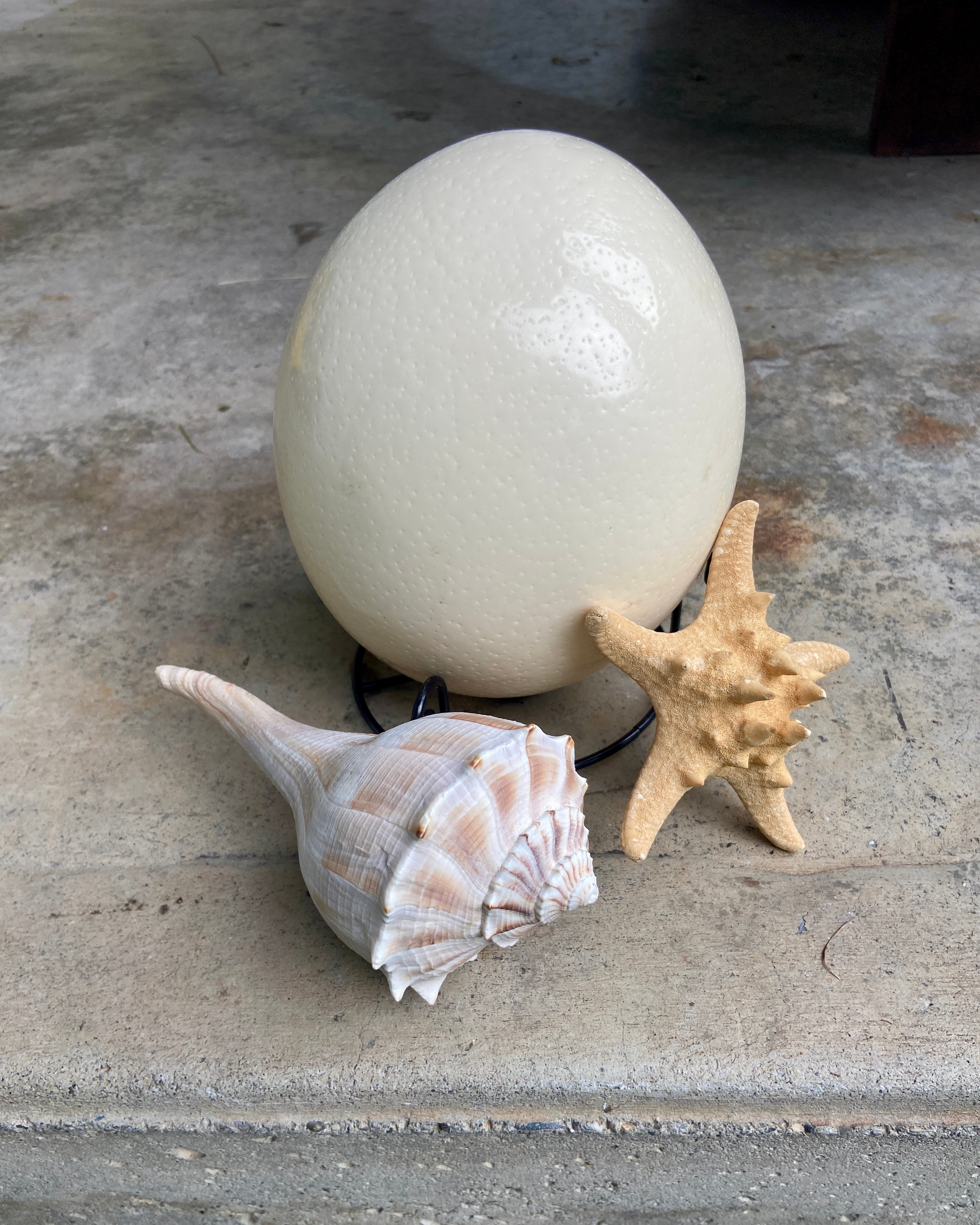
Soft light (overcast light)
A soft source comes from a broad source, such as an overcast sky, a north window, a diffuser panel. Under hard light the division between lit and shadowed planes is abrupt, the cast shadow has a crisp edge, and hollows drop. A hard light brings out surface texture and casts a hard-edged shadow.
Under soft light the shadows don’t have clear boundaries. The darkest tones are the ponts of contact. Surfaces grow lighter as they turn up toward the broad source overhead.
Soft light hides wrinkles and simplifies form, which is why it has often been the preferred light for portraits.
title=”YouTube video player” frameborder=”0” allow=”accelerometer; autoplay; clipboard-write; encrypted-media; gyroscope; picture-in-picture; web-share” referrerpolicy=”strict-origin-when-cross-origin” allowfullscreen></iframe>
“Soft light . . . simplifies form . . .” Which is why I prefer it for drawing and painting outdoors. I live in a region that has hard light more often than not, very intense light, thin air, low humidity. The high contrast obscures, rather than reveals, form (for me). And the illuminated sides of forms are almost bleached of color. Many artists are able to embrace this and make wonderful pictures, but I’m attracted to paintings in which the light source seems to be everywhere and nowhere in particular. So yeah, love those occasional overcast days. I would definitely be choosing to paint the second photo of the egg and shells.
Thank you so much! I do appreciate your taking time to rephrase this. Now it makes sense to my often fuzzy brain.