

Great Artists Who Used Showmanship
Five artists of the past who dazzled contemporaries with their sense of theater

Some visual artists in the past used showmanship as a key part of their public persona. For them, making art was more than a private act accomplished alone in the studio. Many of the best painters treated their studios as stages, and the act of painting as a kind of performance.
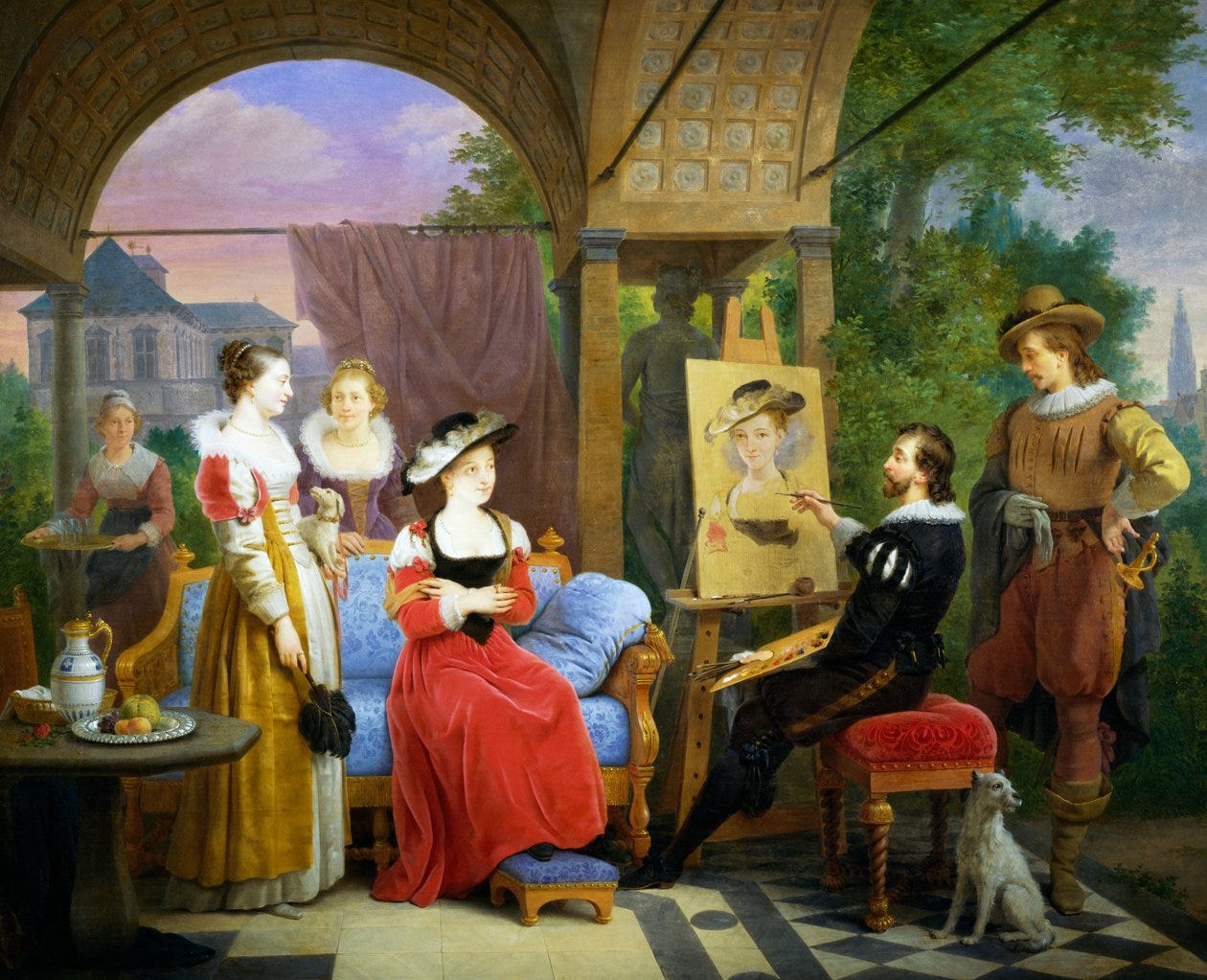
Rubens
The most famous example comes from Antwerp in the 1620s. Visitors to Peter Paul Rubens’s studio described how Rubens painted on large canvases while a secretary read aloud from Tacitus or Seneca. At the same time, he dictated letters—often in a different language from the one being read to him—while holding conversation with whatever duke or diplomat happened to be standing nearby.
He treated his painting hand as almost autonomous, an instinctive instrument doing its work while the rest of his mind attended to diplomacy, correspondence, and classical literature.
Van Dyck
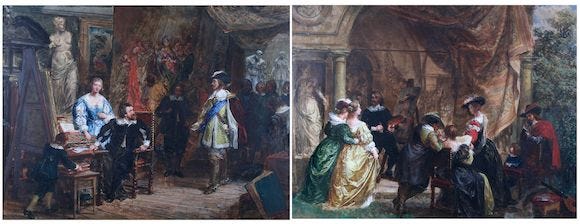
Anthony van Dyck, Rubens’s greatest pupil, took a different approach to studio performance. Where Rubens dazzled visitors with the spectacle of multitasking genius, van Dyck stage-managed the entire environment around the sitting.
In his London studio at Blackfriars, he kept a table of fine food and employed musicians to play during portrait sessions. The sittings themselves were limited to about an hour—just long enough for van Dyck to make a rapid study of the head and note the colors before turning the canvas over to assistants for drapery and hands. His household rivaled those of his aristocratic clients, and Charles I reportedly visited as much for the atmosphere as for the portraits.
Landseer
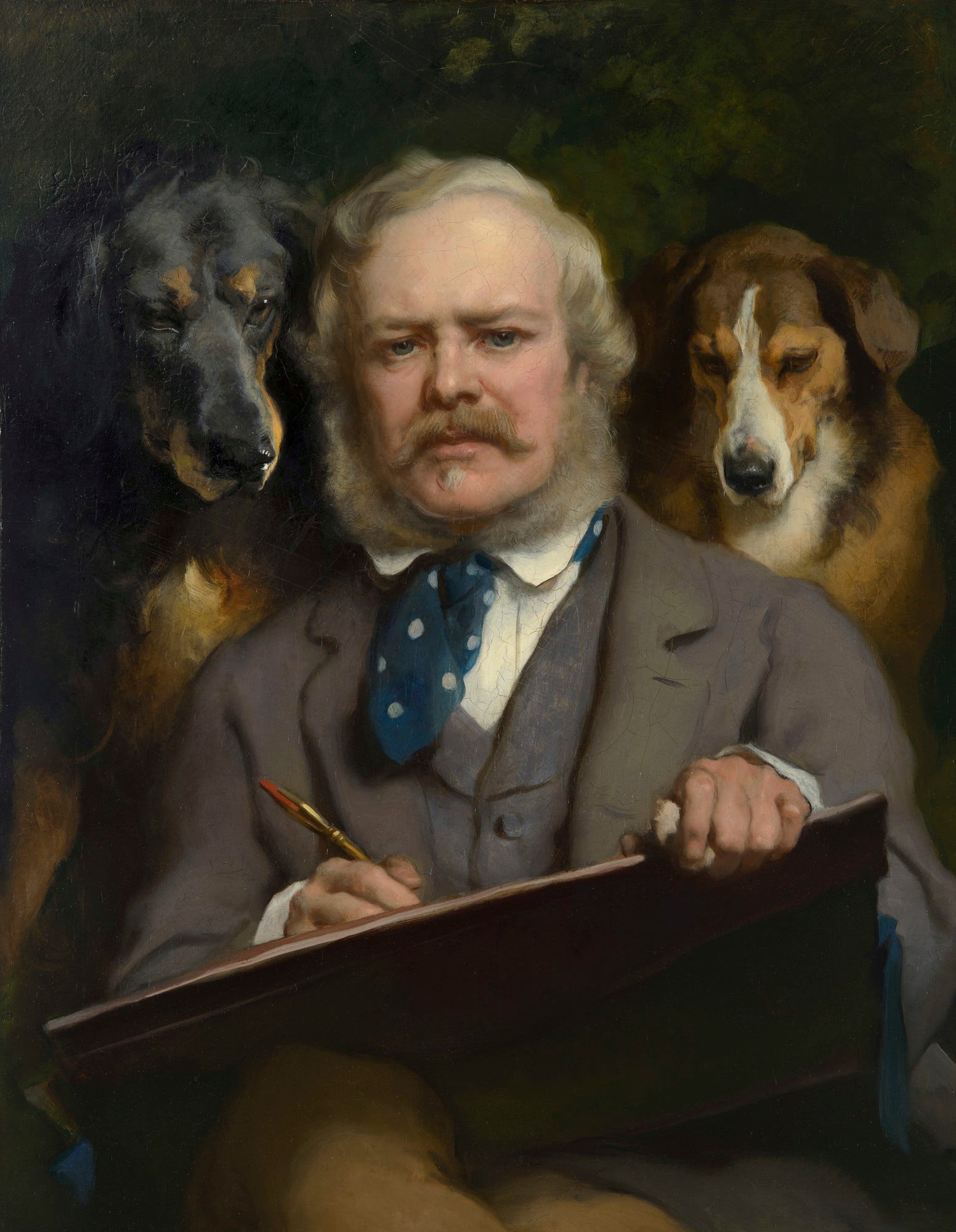
Sir Edwin Landseer brought showmanship into the drawing room as a kind of parlor magic. At a London dinner party, after a guest declared that drawing two things simultaneously was impossible, Landseer picked up a pencil in each hand and sketched the perfect profile of a stag’s antlered head with one hand and the outline of a horse with the other—at the same time.
He was also legendary for speed. Houseguests would leave for a short Sunday morning church service and return to find a large, finished oil study of an animal on his easel, completed in under an hour.
Carolus-Duran
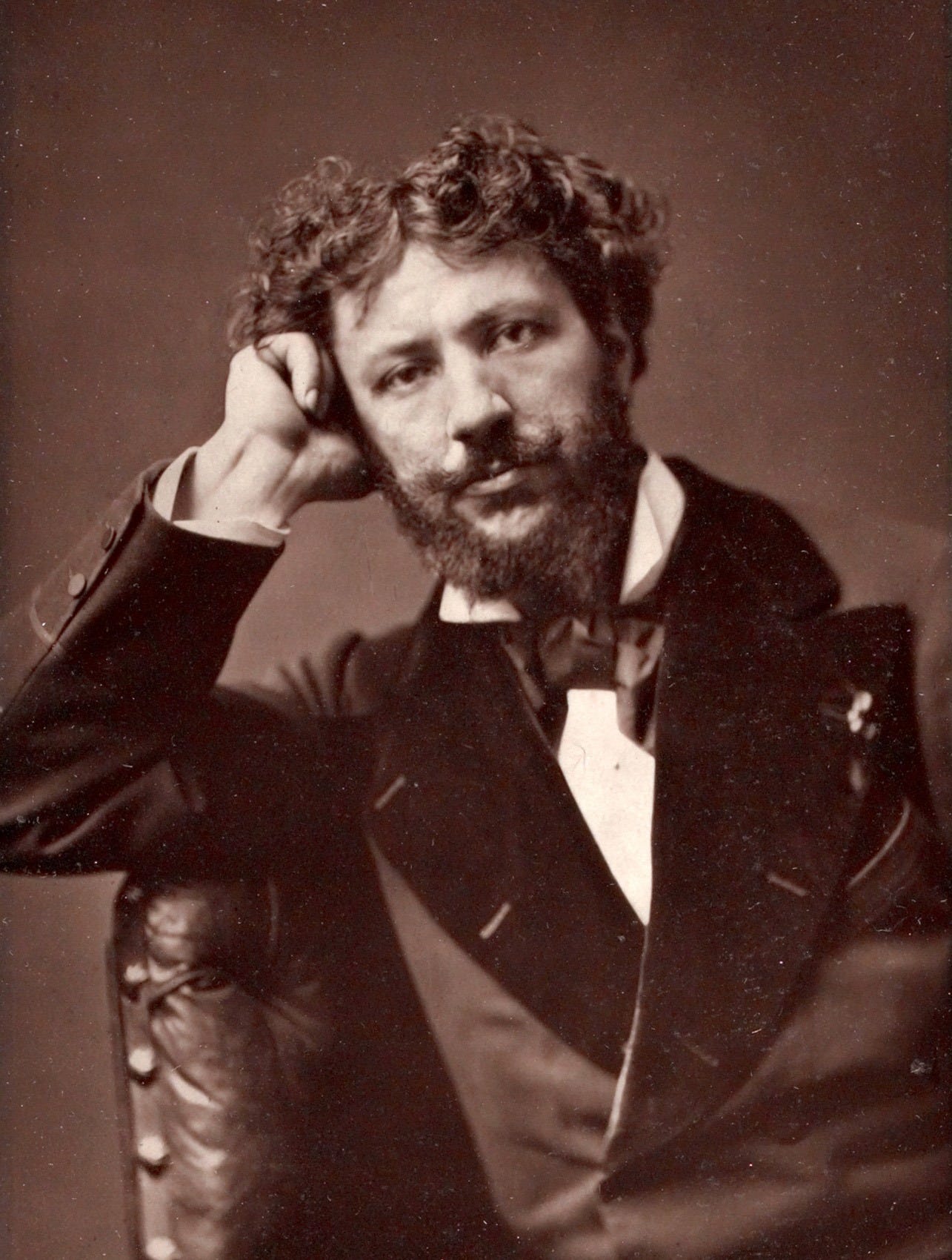
Carolus-Duran was the Parisian master who worked with a generation of American painters, including Sargent. Carolas-Duran cultivated a persona that was part maestro, part matinee idol. He was known as “Carambolus Duran” for his skill at billiards. In private, he played guitar and fenced with real proficiency.
His showmanship extended into the classroom. When Carolus-Duran entered his atelier, it was a formal event. Every student rose in place while the master performed a ritualistic inspection of their work.
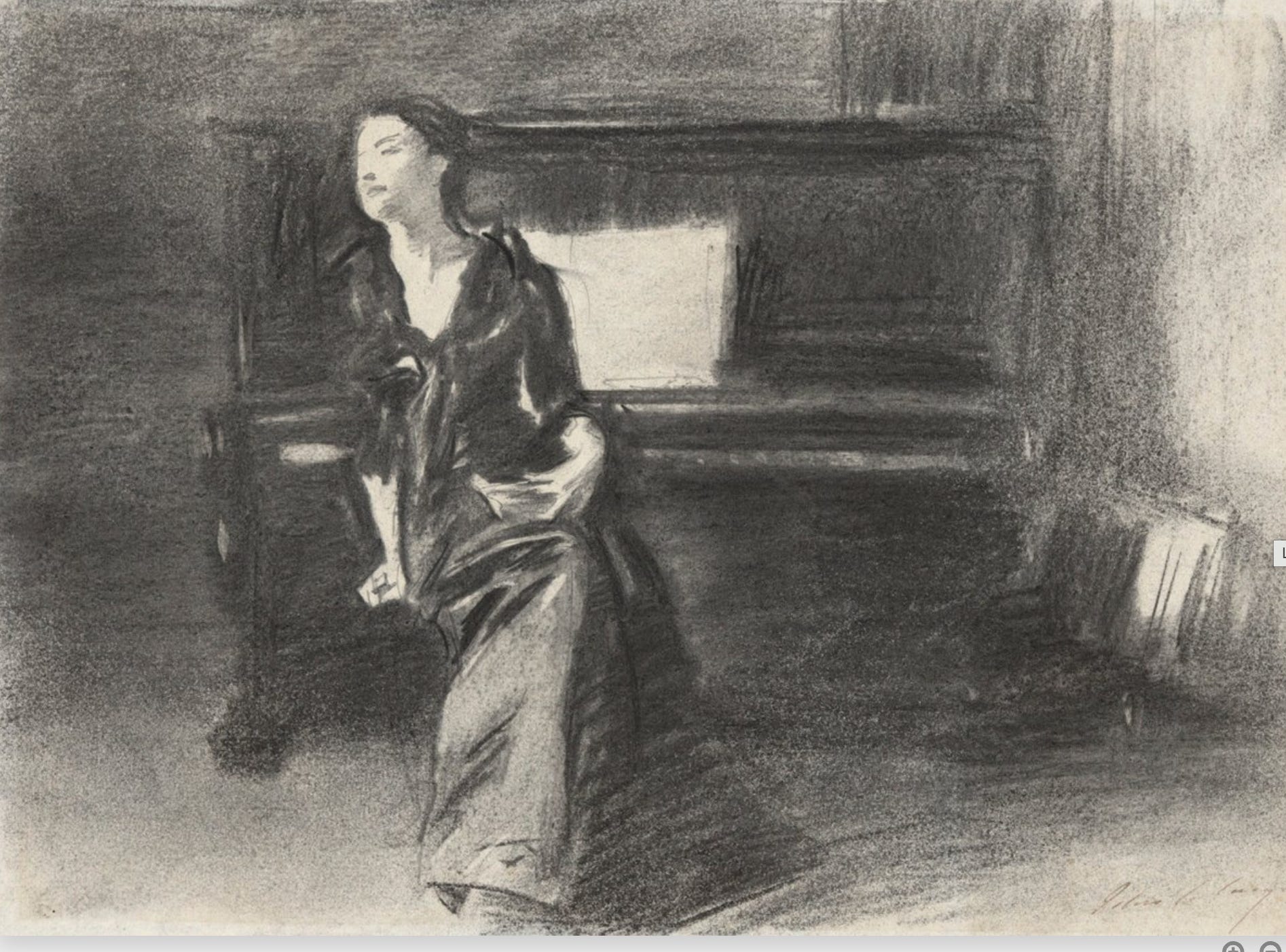
Sargent
John Singer Sargent is the odd case here—a man with crippling stage fright who nonetheless resorted to performance when the work demanded it. He described “something like panic” at the thought of public speaking, and he avoided the professional stage entirely.
But in the studio, painting the temperamental dancer Carmencita, Sargent discovered that his model needed to be fascinated into holding still. So he painted his own nose red. He performed the bizarre feat of “eating his cigar.” Just as Norman Rockwell “hammed it up” in front of his models during photo sessions, Sargent wasn’t above playing the clown in service of the painting.
Sargent had a private love of music that he shared in the confines of his painting studio. He would sit at the piano and play complex Fauré compositions for friends and portrait clients. His musical intelligence was serious enough that contemporaries suggested he could have had a parallel career as a musician.
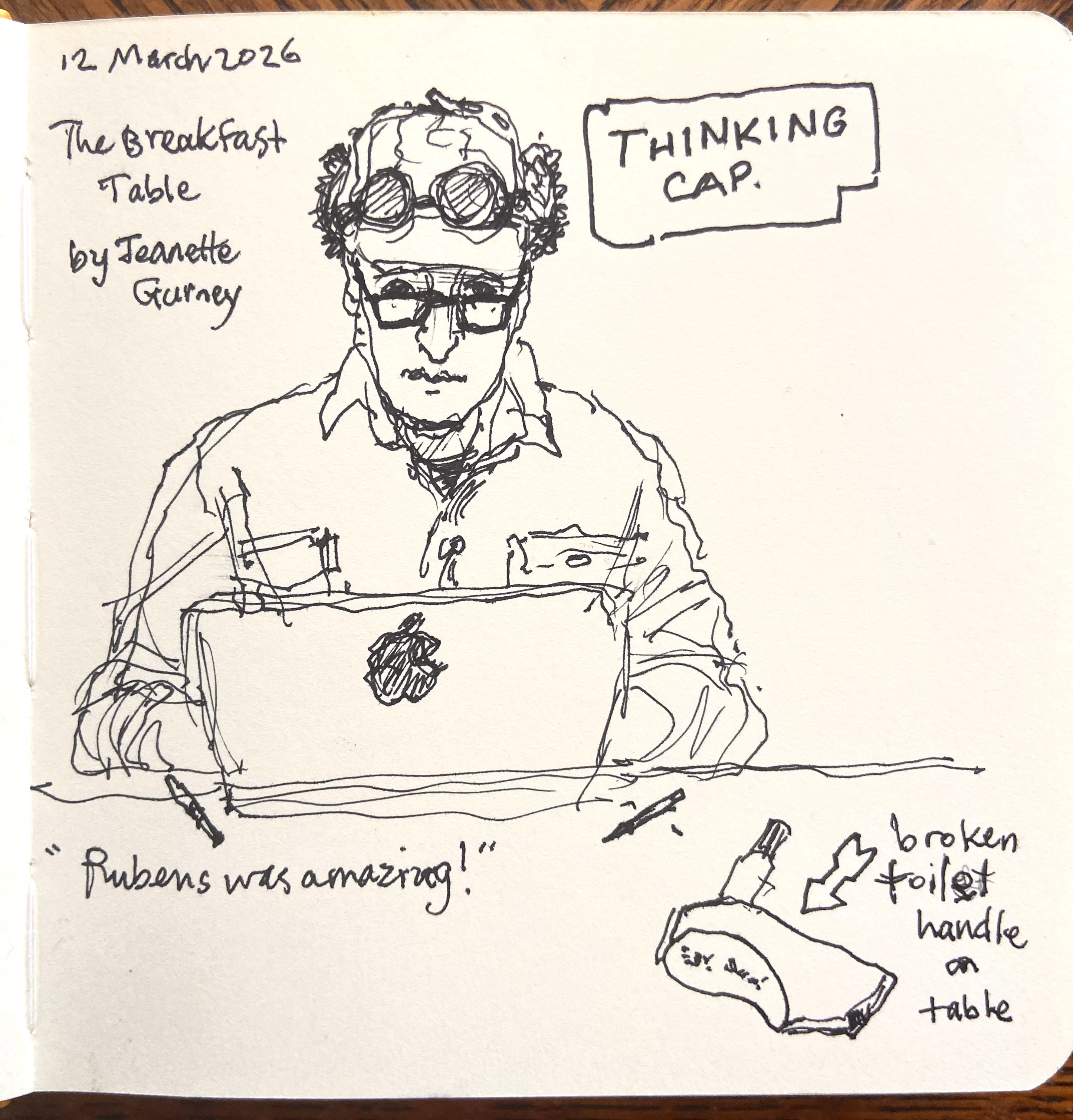
For all these artists, a sense of theatricality was strategic. If you were a court painter or a society portraitist, your livelihood depended on wealthy patrons, and wealthy patrons like to be entertained. Some of it was temperamental—certain painters simply couldn’t resist an audience.
Should artists today be concerned with showmanship?
Do you think an artist needs to have a sense of theatricality now in this world of social media and short-form video? Should an artist play to the camera to make their work more visible or do you think they should not show off and just let their work speak for itself? Please let me know your pet peeves (in general; don’t call anyone out by name), and best practices (OK to mention names) in the comments.
Hi James. When I'm painting plein air, I am acutely aware that for some, this will be a rare moment in their lives when they are hiking on a remote trail and come upon an artist. Rather than perform, I try to be kind (thanks again for your example!), focusing on the story they will come away with to stop myself from being impatient on my work being disrupted. I try to see it as a moment in time that won't occur again, so it can be a special conversation. The joyful energy that was shared will be added to the painting itself.
The toilet handle in Jeanette's lovely sketch reminds me of another show-person artist, Fox.
Onlooker, at Huntington Gardens, says to him, while he's setting up outside for painting,
"Are you an artist?"
Fox replies, "No, I'm a plumber, I'm installing a commode."
David Starrett, aka, Fox, was the son of an actor in old Western movies and even vaudeville, both of those guys Fox and the Durango Kid, were "always on".
Fox just couldn't help himself. He had to entertain, even if it was just for himself.
I loved it. Admired it as a child and as an adult.
Have as much fun as you can, artist, model, agent, collector, audience. Always.